Schools are undergoing very swift changes in the digital era of today. All activities such as managing classes, taking attendance, and communicating with parents, fee collections, and learning needs facilitation have to be organized in a perfect manner. Digital systems such as ERP, LMS, and School Management Systems are the only solutions to such problems.
Although these three expressions are sometimes considered synonymous, they actually correspond to different functionalities. Let’s clarify the roles of each and how they contribute to making the schools operate in a more intelligent way.
What Is an ERP in Education?
ERP (Enterprise Resource Planning) is a software that allows educational institutions to manage all their administration and operational functions through a single platform. It serves as the underlying system preventing the disruption of the school’s non-academic sector operations in a seamless manner.
What an ERP usually handles:
- Student admissions and enrollment
- Fee collection, accounting, and budgeting
- HR management for teachers and staff
- Attendance and payroll
- Transportation, library, and inventory management
- Reporting and analytics for school leaders
In short, ERP deals with the business and management aspects of education. It takes away manual work and time-consuming activities; besides, all the administrative data remains connected. For instance, once a student fee is cleared, the finance and student records automatically get updated with the same data without any manual entry of it twice.
What Is an LMS?
An LMS is a system that centers around education and training exclusively. It serves as the “virtual classroom” where all interactions related to content, assessments, and learner monitoring take place.
Main characteristics of an LMS:
- Giving a subject or course, lyrical materials (videos, documents)
- Assignments and quizzes
- Monitoring student progress and performance
- Mediation of communication between teachers and students
- Backing up online and blended learning
Due to LMS being very learning-centric, one article points out that the primary sphere of the LMS is content delivery and learner interaction whereas the sphere of the ERP is mainly that of managing the various business processes.
What Is a School Management System?
An SMS or School Management System consolidates all the educational and administrative processes on a common platform. It is tailored more to schools than a standard ERP package, and usually, combines the functionalities of both ERP as well as LMS.
Functions of a School Management System:
- Students’ records and profiles
- Attendance and timetable management
- Exams generation and report cards
- Fees collection and notifications
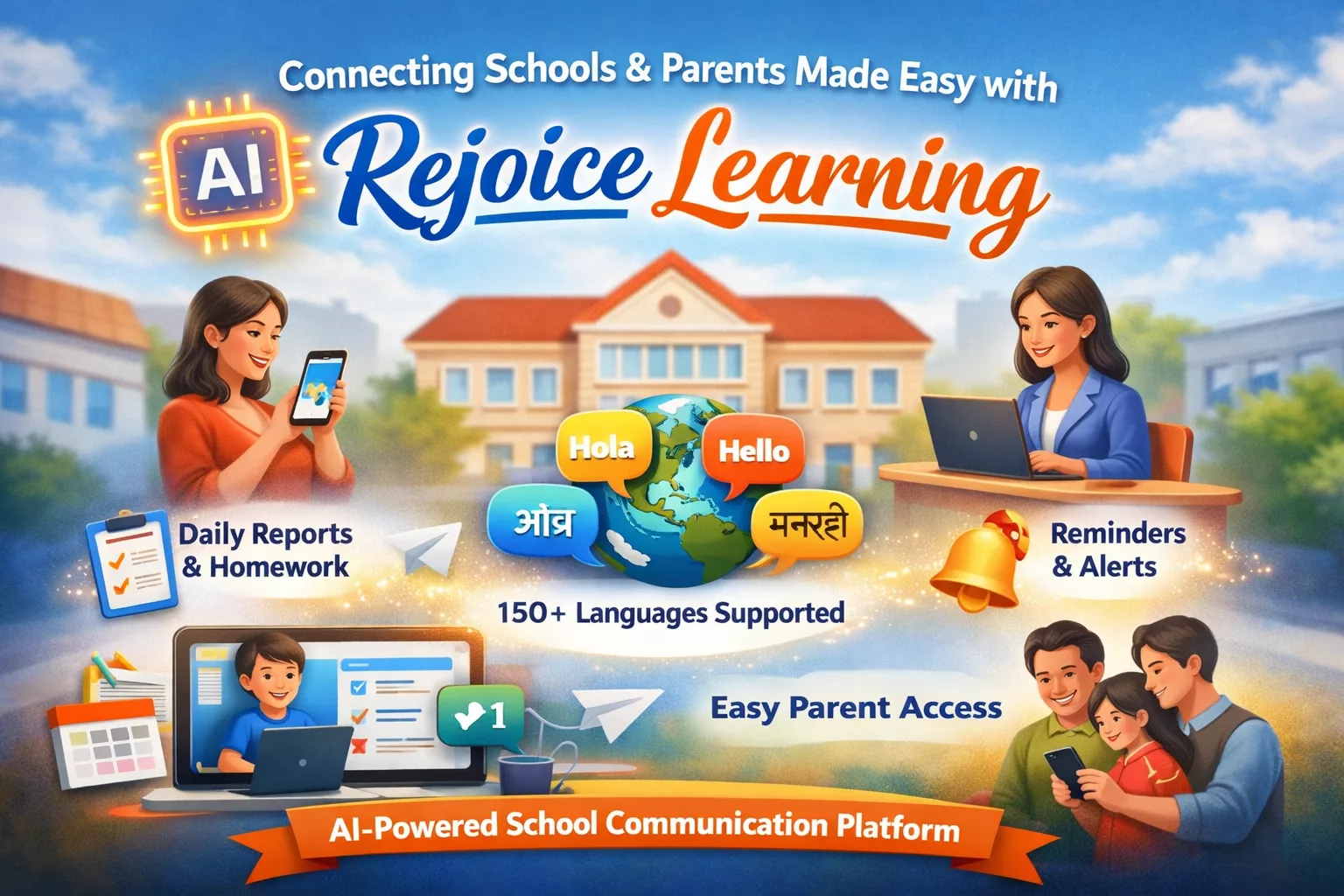
- Parent communication and announcements
- Library, transport, and hostel management (if applicable)
ERP vs. LMS vs. School Management System
Here’s a simple comparison to understand the differences clearly:
| Feature | ERP | LMS | School Management System |
| Main Focus | Administration & operations | Teaching & learning | Overall school functioning |
| Main Users | Management & admin staff | Teachers & student | Everyone – admin, teachers, students, parents |
| Purpose | Streamline school operations | Deliver and track learning | Combine both academic and administrative needs |
| Examples of Use | Fee collection, payroll, reports | Get classes online with quizzes and assignments | Provide attendance, communication, and exam results |
Why We Know the Differences
Different schools have different requirements. Some schools require assistance in minimizing paperwork as well as data management, while others are looking for better online learning tools or parent participation solutions. Schools, however, must be aware of the ERP, LMS, and School Management Systems features before making a choice that is not only wise but also one that will serve their unique needs.
Let’s take a look at the importance of these systems:
A major gain in efficiency
Digital systems can help schools automate tasks such as the keeping of attendance records, tracking of payment of fees, and reporting. All the processes done automatically consume less time and there are no manual errors involved.
More effective decision-making
The school administrators can gain access to the real-time insights required for making better decisions when all the school data is kept in one system.
Better learning experience
LMS will not only enhance the interaction among teachers and students but also make the classes more accessible. For instance, students can set their own learning speed while the tutors are aware of those who need more help.
Better Communication
Through the use of electronic resources, parents are capable of monitoring the whereabouts of their children, their academic performance, and participation in school activities, and at the same time, they will not be a constant reminder.
Future Readiness
Those schools which implement the digital system now will be well positioned to manage hybrid and AI-driven teaching and learning in the future.
How They Work Together
Although ERP, LMS, and School Management Systems can perform their functions independently, their benefits are maximized when they work together in an integrated environment.
To give an example:
- The ERP keeps student info and updates the records right away.
- The LMS applies that data to provide every student with access to the appropriate courses.
- The School Management System interlinks all, associating teaching with management.
Due to this integration, there will be no double data entries, considerably reduced mistakes, and a more pleasant workflow for instructors, learners, and office staff.
Choosing the Right Solution
If your educational institution is considering the digital transition, then you should definitely take the points below into consideration before selecting a system:
- Recognize your main requirement — Improved education delivery, smooth management, or both?
- Seek out software that is intuitive to use, especially in the case of teachers and students, who will be new to it.
- Examine if access is possible for parents and students over mobile today.
- It should guarantee data protection and provide trustworthy technical support.
- Opt for a flexible solution that adapts to the growth of your school.
The right system can completely revolutionize your school’s operating methods and student learning — turning every process into an efficient and meaningful one.
Conclusion
ERP, LMS, and School Management Systems are three indispensable tools that modern education cannot do without. While ERP is mainly concerned with the administration of the school, LMS takes care of the teaching and learning side of things, and the School Management System is the common platform that integrates everything.
The cooperation of these systems can lead to a situation where schools no longer have to allocate a lot of time, for communication and communication they would have to have very poor communication – on the contrary, they will have a mutually beneficial communication which will result in better learning experiences for their students.
Digital tools helping schools in making education simpler, smarter, and more effective is our mission at Rejoice Learning —thus giving teachers the chance to devote their full attention to the most important part of their job: motivating students to learn and grow.
FAQs Regarding ERP, LMS, and School Management Systems
What is an ERP system in schools?
An ERP (Enterprise Resource Planning) system is a powerful tool that assists educational institutions in managing their operations more efficiently. It combines and takes care of such processes as admissions, fees, payroll, attendance, and accounting, to mention a few. It is mainly used by the administrative staff and the management for keeping everything in order and enabling a smooth operation.
What are the differences between an LMS and an ERP?
Great query! LMS (Learning Management System) deals with the teaching and learning process, while ERP is concerned with management and operations support.
LMS is, for example, a great tool for teachers because it allows them to upload lessons, assign tasks, and check student progress. On the other hand, ERP handles the administration of tuition, employee, and reporting aspects. Their functions may differ, but their interconnection could provide a more pleasant experience.
What does a School Management System entail?
A School Management System (SMS) is a software product that combines the academic and administrative processes of a school into one platform. It handles everything from student attendance to grading, communication, examination scheduling, and even fee collection. Basically, it is a tool that helps teachers, parents, students, and administrative staff communicate with each other and stay updated. You could think of it as the link between ERP and LMS.
Is it necessary for schools to implement all three systems?
Not necessary all the time. The answer will be based on the school’s size and its requirements.
- A small-sized school may opt for the School Management System as its starting point since it takes care of most of its functions.
- On the other hand, big institutions may choose an integrated platform that includes both or solely use the ERP for operation and the LMS for learning.
Choose a solution that meshes perfectly with your school’s workflow and teaching objectives.
Can ERP and LMS operate in conjunction?
Absolutely, that’s the most optimal configuration! Automatic data transfer is a result of connecting ERP with LMS. To illustrate, after a student gets added to the ERP, their particulars come to be available in the LMS immediately. Consequently, time is saved and the risk of doing the same work twice is eliminated.